Field Notes
Practical notes on systems, governance, and implementation reality.
Short essays, implementation patterns, and working observations from the space between application architecture, cybersecurity governance, and organizational execution.
-

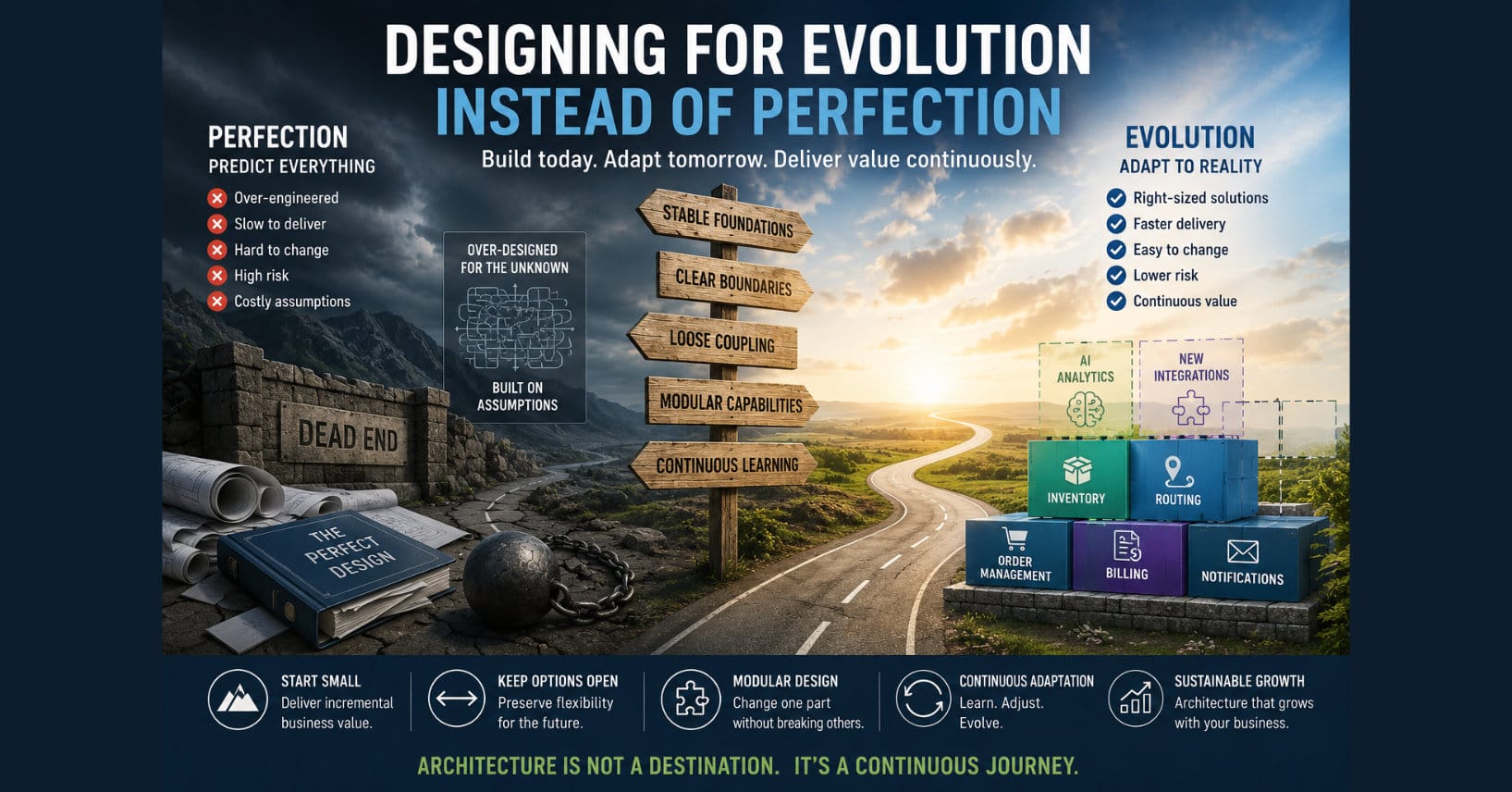
Designing for Evolution Instead of Perfection
The best enterprise architectures are not perfect—they are adaptable. Learn why designing for evolution creates systems that respond to change without costly redesigns.
-
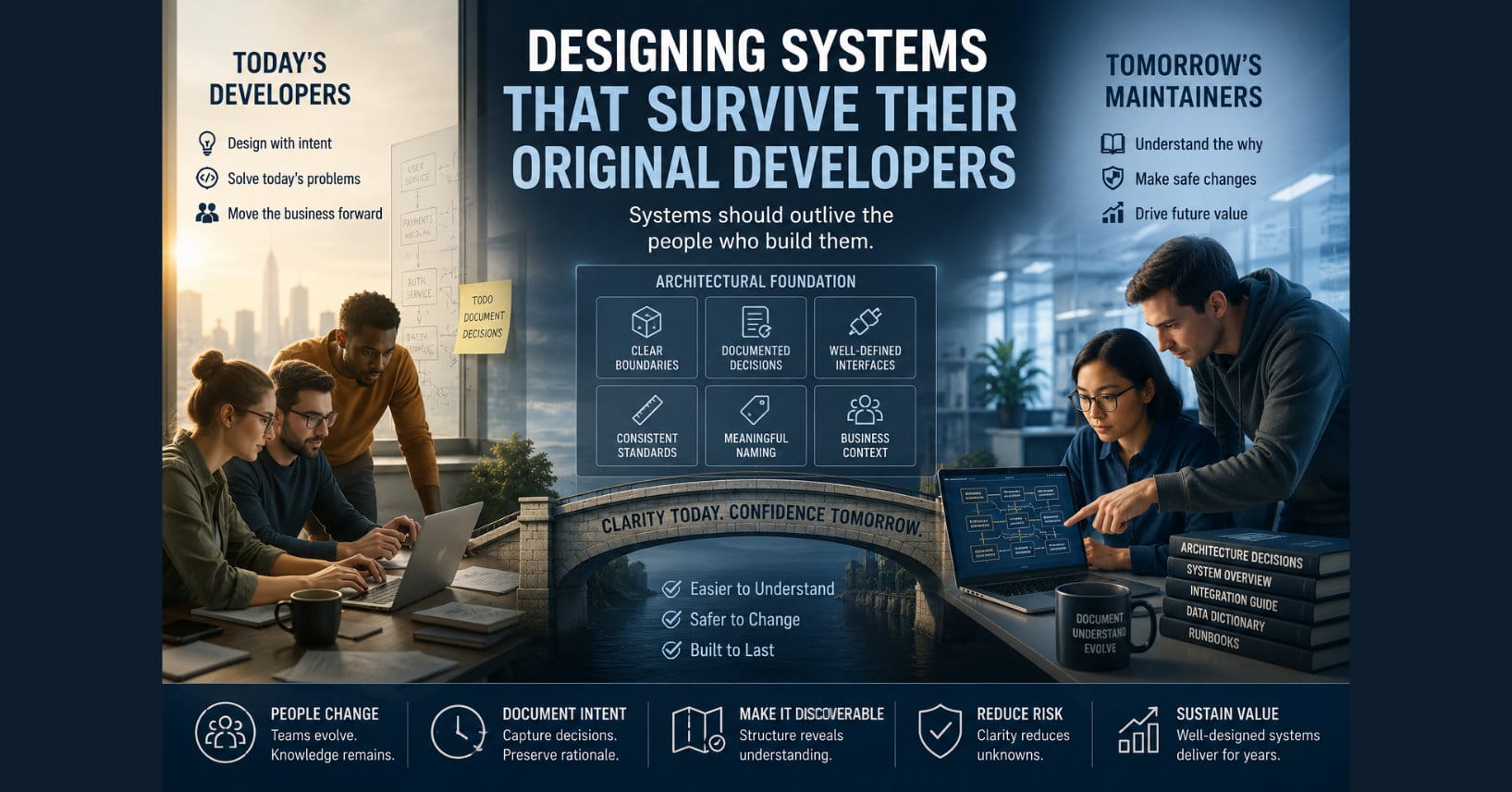
Designing Systems That Survive Their Original Developers
Enterprise systems should outlive the people who build them. Learn how clear architecture, documentation, and intentional design preserve knowledge for future teams.
-
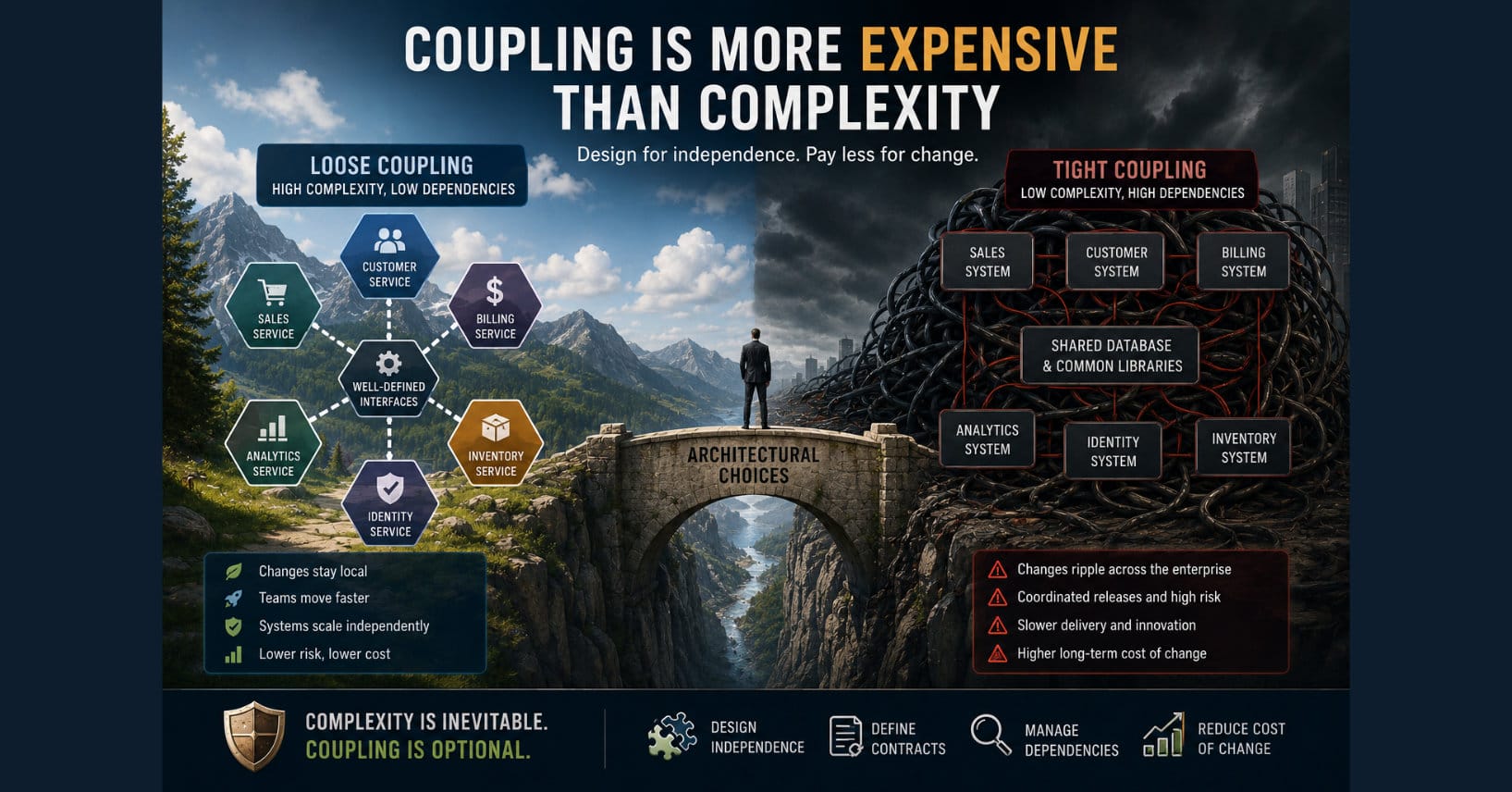
Coupling Is More Expensive Than Complexity
Complex systems are not necessarily expensive to maintain. Tightly coupled systems are. Learn why reducing dependencies is one of the most valuable goals of enterprise architecture.
-
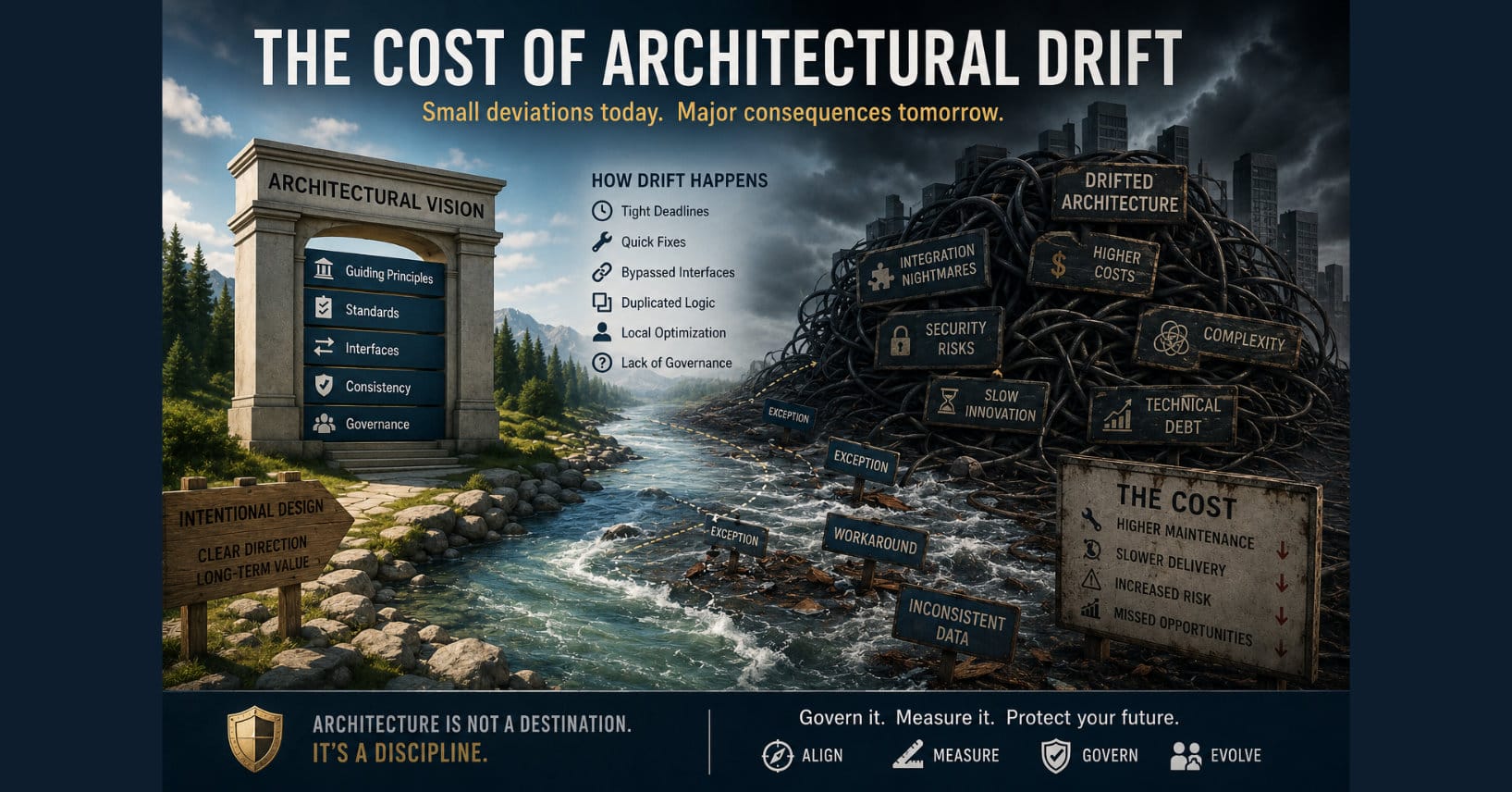
The Cost of Architectural Drift
Architectural drift rarely happens all at once. It begins with small exceptions that gradually erode system integrity, increasing costs, complexity, and business risk over time.
-
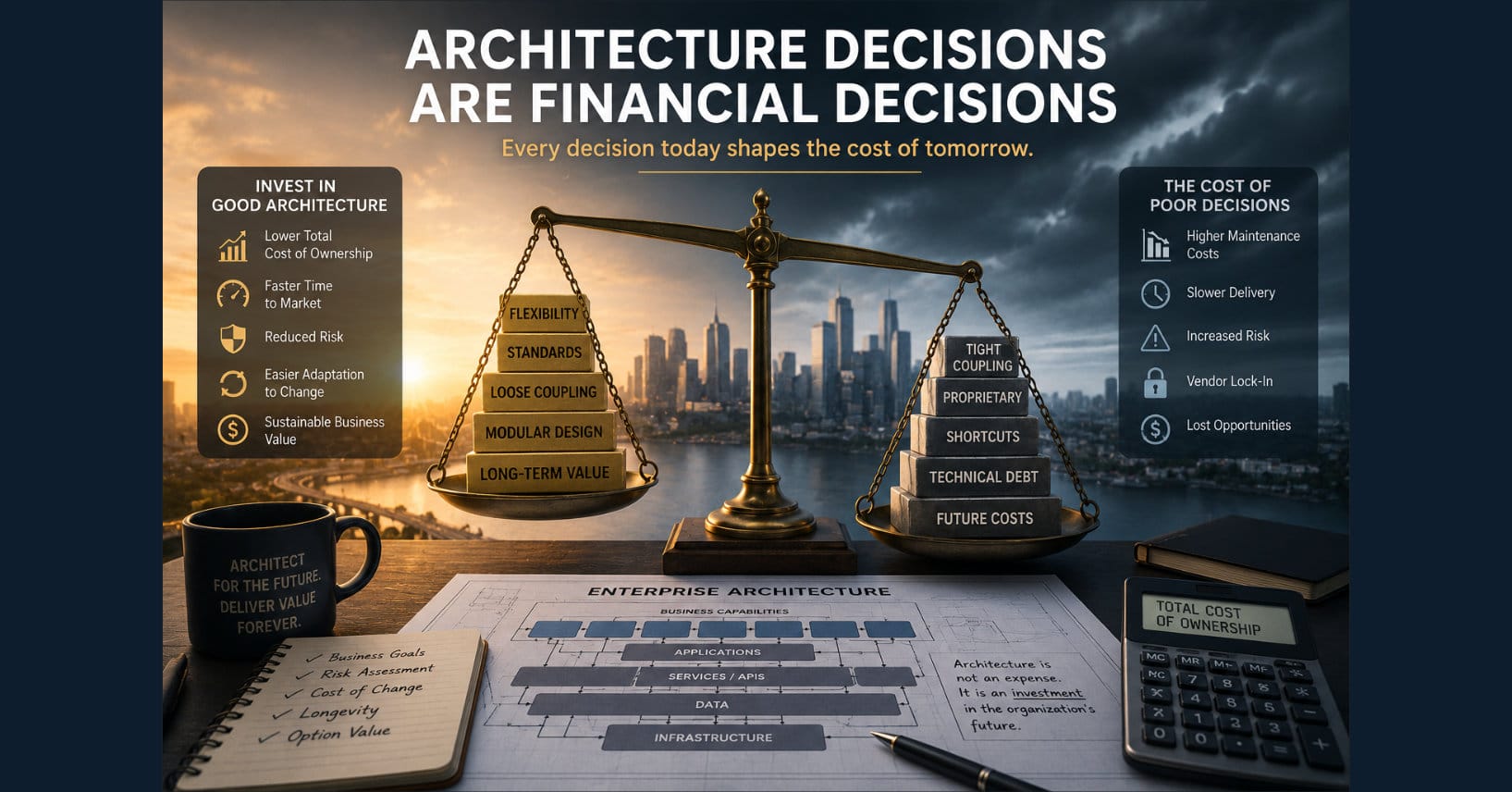
Architecture Decisions Are Financial Decisions
Enterprise architecture is more than a technical discipline—it is a financial one. Learn how every architectural decision influences cost, agility, risk, and long-term business value.
-
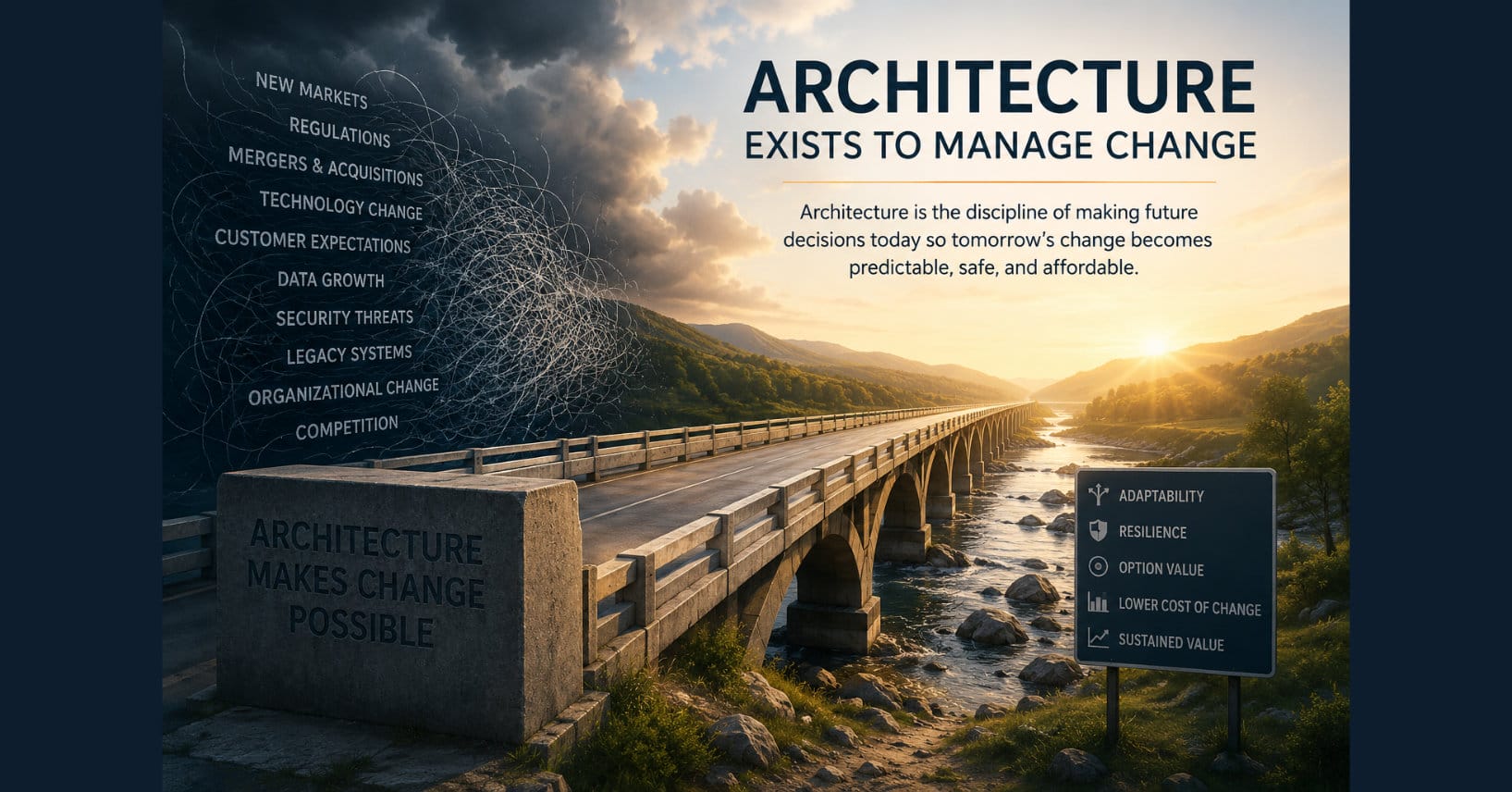
Architecture Exists to Manage Change
Enterprise architecture is not about creating diagrams or selecting technologies. Its true purpose is to help organizations adapt to changing business demands while reducing the cost and risk of future change.
-
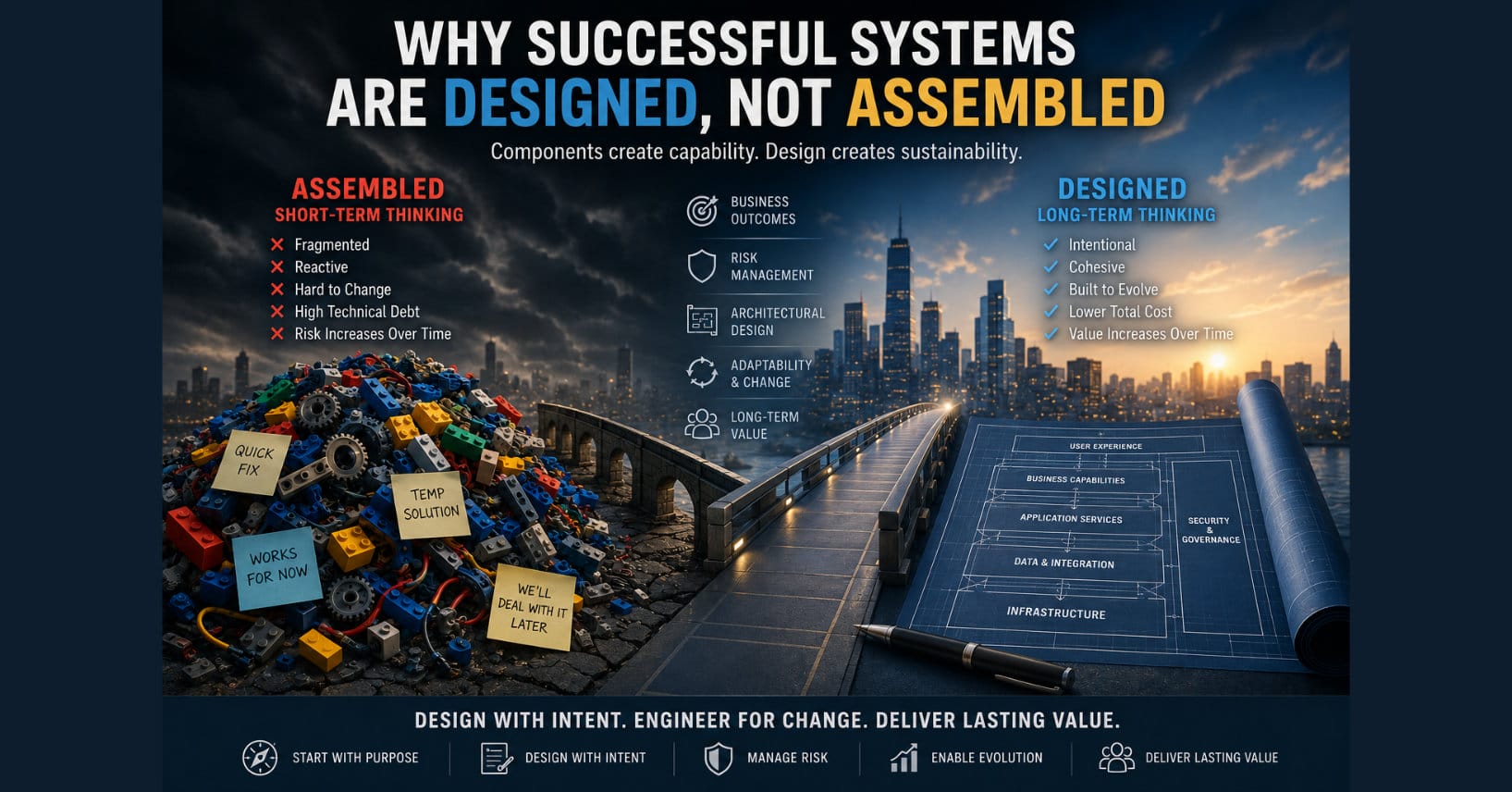
Why Successful Systems Are Designed, Not Assembled
Modern software can be assembled faster than ever, but enterprise systems are not built through components alone. Discover why intentional design—not technology selection—is the foundation of sustainable, scalable, and resilient software.
-
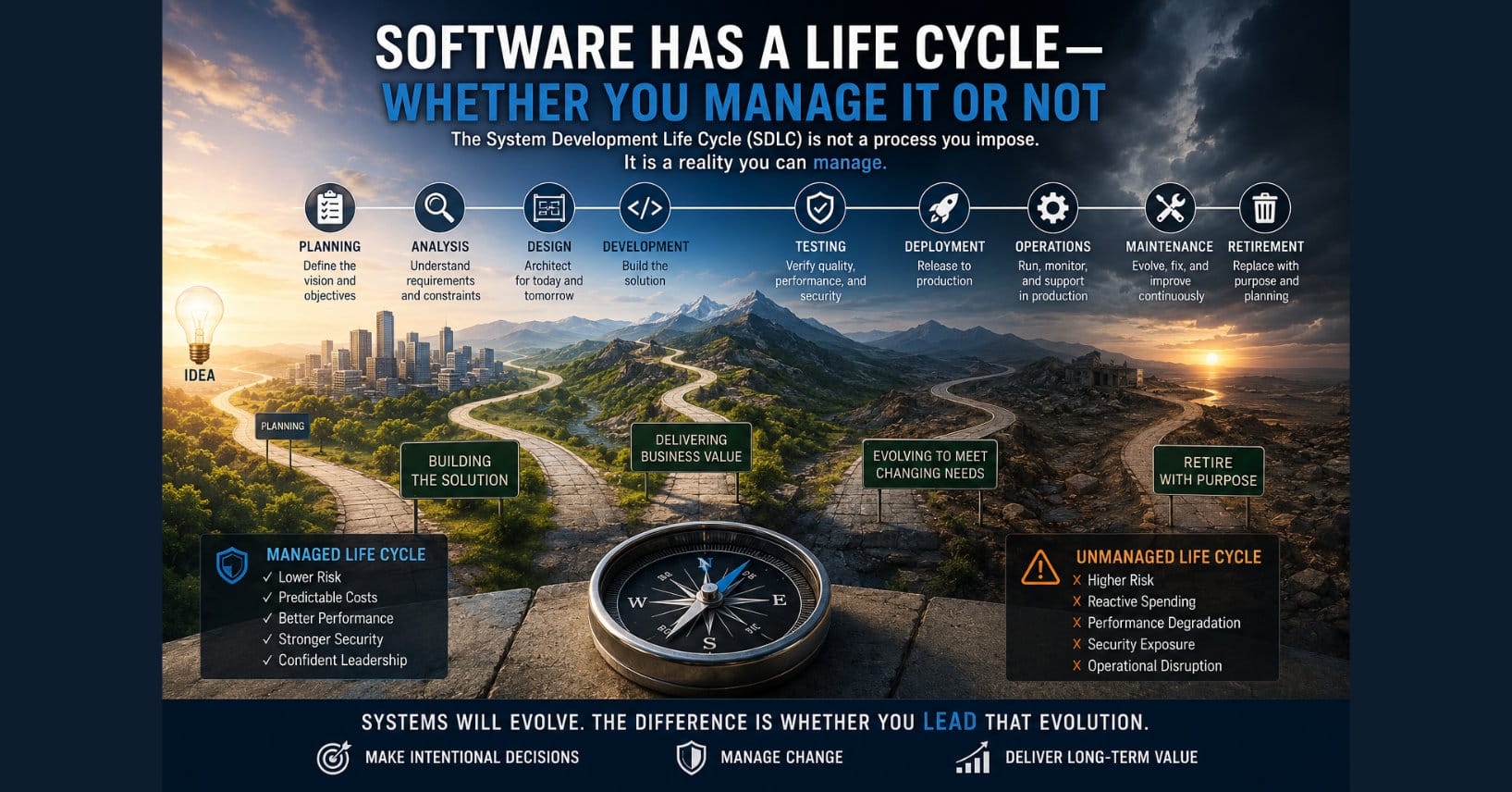
Software Has a Life Cycle—Whether You Manage It or Not
Every business system has a life cycle, whether it’s managed intentionally or not. Learn why the System Development Life Cycle (SDLC) is more than a development methodology—it’s a framework for managing change, reducing risk,…